
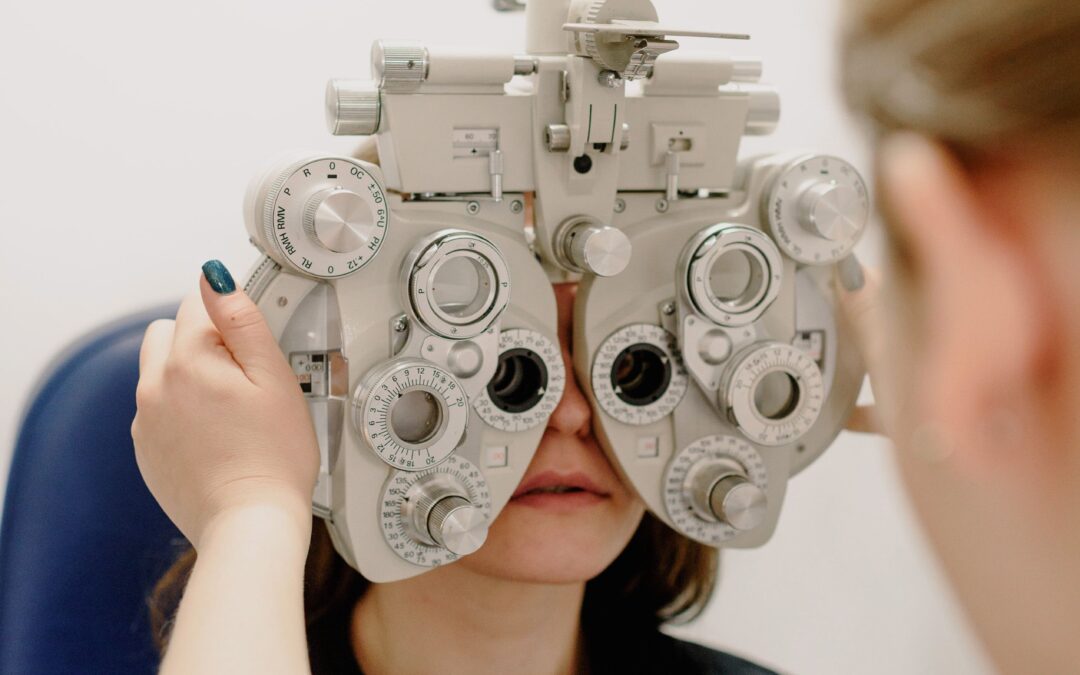
Eye dilation is a routine part of a comprehensive eye examination. It gives your optometrist a wider view inside your eyes, helping them assess your overall eye health and look for signs of conditions that may not be otherwise visible.
Why Are Eyes Dilated During an Eye Exam?
Dilating eye drops temporarily enlarge (dilate) your pupils. This allows your Langley eye doctor to examine the retina, optic nerve, and blood vessels at the back of the eye more thoroughly.
A comprehensive eye examination is about much more than updating a glasses prescription. According to Vision Care Centre, eye exams help detect eye conditions such as glaucoma, cataracts and macular degeneration. They may also reveal signs of certain systemic health conditions that affect the eyes.
What Happens During the Dilation Process?
The process itself is simple and usually takes only a few minutes.
You can generally expect eye drops to be placed into each eye, a brief stinging sensation that quickly fades, 15 to 30 minutes for your pupils to fully dilate, and an optometrist will then perform the internal examination using specialized equipment.
Throughout the appointment, your eye care team will explain each step and answer any questions you may have so you know what to expect. Vision Care Centre also emphasizes keeping patients informed and comfortable during every stage of the examination.
What Side Effects Should You Expect?
Eye dilation temporarily changes how your eyes respond to light and focus.
Common temporary effects include:
- Increased sensitivity to bright light
- Blurred near vision
- Difficulty reading small print
- Larger-looking pupils
- Mild glare outdoors
These effects gradually wear off as the drops lose their effect. The exact duration varies from person to person. Many patients find it helpful to bring sunglasses to reduce light sensitivity when leaving the clinic. Due to the effects of the drops it is recommended not to drive with your eyes dilated.
When Is Dilation Especially Important?
Your optometrist may recommend dilation more frequently if:
- You have diabetes or other health conditions that can affect the eyes.
- You have symptoms such as flashes, floaters, or sudden vision changes.
- There is a family history of certain eye diseases.
- A closer examination of the retina or optic nerve is needed.
Preparing for Your Appointment
A little preparation can make your visit more comfortable. Before your eye exam:
- Arrange a ride so you do not have to drive after the exam.
- Bring sunglasses for your trip home.
- Allow extra time if dilation is expected.
- Mention any recent changes in your vision.
- Bring your current glasses or contact lenses.
- Share any medications or health conditions that may affect your eyes.
Providing a complete medical and vision history helps your optometrist tailor the examination to your needs. Vision Care Centre Langley notes that discussions about your vision, medical history, lifestyle, and visual needs are an important part of every comprehensive exam.
The Value of a Comprehensive Eye Examination
While temporary blurry vision may seem inconvenient, eye dilation allows your optometrist to perform a more complete evaluation of your eye health. Many eye conditions develop gradually and may not produce noticeable symptoms in their early stages, making regular comprehensive examinations an important part of preventive care.
Whether you’re due for a routine checkup, updating your prescription, or experiencing changes in your vision, scheduling an appointment with an experienced eye doctor in the Langley neighborhood can offer support for both vision and overall eye health.
Ready to take the next step for your eye health? Book your comprehensive eye exam with Vision Care Centre today.
Recent Comments